

12 May 2026 ProNutro, Chuckles, and the lessons of ‘New Coke’
‘If it ain’t broke, don’t fix it,’ the old adage goes. It seems some companies have yet to take that on board.….
There are few better barometers of a company’s health than the way it responds to a very public mistake. Does it ’fess up, and fix it quickly? Or does it shrug off the public outcry with an offhand response that people will sommer get used to it?
Any number of companies have opted for the second road – think Tiger Brands’ crippling inability to admit its own factories caused the 2017 listeriosis outbreak, and the ruinous savaging of its reputation and share price that followed.
This toxic cocktail of arrogance, aversion to history, and allowing lawyers to determine a strategy with deep reputational consequences – a fatal error – doesn’t usually end fantastically well.
For consumer companies, which rub up more directly against people’s often fickle tastes, often in more mundane ways than a life-threatening outbreak of disease, the consequences of getting it wrong can be brutal.
I was reminded of this last week by Piet Viljoen, the veteran asset manager and founder of RECM, who writes a fabulous newsletter.
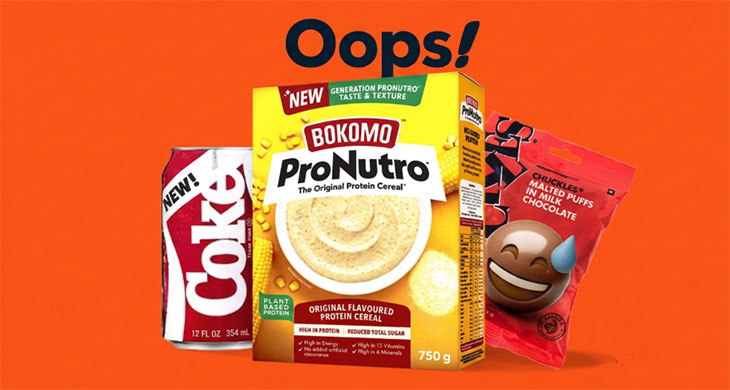
Viljoen wrote of how it was the 41st anniversary of Coca-Cola’s big blunder: replacing its 99-year-old formula with “New Coke”, a sweeter version designed to counter Pepsi’s burgeoning popularity in the 1980s. After a bitter backlash, it took all of 79 days for Coke to admit it had screwed up and revert to “Coca-Cola Classic”.
“This ranks as one of the major misjudgments in corporate history [because] Coca-Cola executives underestimated how much customers would hate losing the original formula,” wrote Viljoen.
It was an apt example of one of the classes of misjudgment tabulated by the late Charlie Munger, Warren Buffett’s business partner at Berkshire Hathaway. Here, it was a failure to realise how much more strongly people react to a loss – the original Coke taste – than to a comparable gain.
“In the investment world, it has been my experience that the best investors succeed not because they are the smartest people in the room, but because they consistently avoid big mistakes,” said Viljoen. “I’m sure this holds true in many other spheres of life.”
Cereal missteps
The Coke story is pretty relevant today after a botched decision by Bokomo, now owned by PepsiCo, to overhaul the recipe for ProNutro. This breakfast cereal, launched in 1962 as “the Wonder Food” with input from the Medical Research Institute of Joburg, was a staple for many kids.
But PepsiCo snuck an overhaul into the market in the past year, sparking a ferocious revolt. “Tasted funny, smells funny,” said one consumer. “A box of crumped chemicals, I threw the entire box away,” said another, asking: “Why change the recipe when we absolutely loved it?” Some people’s dogs apparently wouldn’t touch it, but it seems garden birds are less fussy.
It is somewhat ironic that ProNutro’s overhaul happened at the instance of PepsiCo – the drinks company whose success precipitated Coke’s major blunder – which bought Bokomo’s parent, Pioneer Foods, in 2023.
PepsiCo said the ProNutro decision was “in part due to ageing infrastructure and unreliable equipment performance which, over time, would have negatively impacted the quality of product expected by our consumers”…..
CurrencyNews.co.za: Read the full article here