



29 Jun 2023 Chewing it over: the gummy supplement craze
Bright, fun and tasty, there is now a ‘gummy’ for everything. But do these ‘candyceuticals’ offer any real benefits? Here’s a look into the booming chewables market – and what exactly are consumers being asked to swallow.
Squishy, fruity, sweet-tasting, chewable treats in adorable shapes, such as teddy bears, stars and berries. They’re not in plastic packets, but colourful tubs or beautifully designed subscription boxes.
We’re not talking about children’s sweeties, but gummy supplements. We’re told these little morsels can give us thicker hair, healthier skin and stronger nails, they can improve our sleep and mood, and ease our digestion. Taken daily, they’ll even help us cope with the demands of modern life. And they are very big business.
The UK vitamins and supplements market is currently worth £520m, with nearly one in four Brits popping vitamins, minerals or supplements daily and, increasingly, we are chewing rather than swallowing our way to healthier versions of ourselves.
Gummies are the star of the industry.
The global market in cute, chewable gummy vitamins is worth an estimated $7.3bn, displacing pills which, according to the Nutrition Business Journal, officially slipped behind non-pill format supplements in 2019.
The appeal of gummies ties into a high demand for personalised supplements, according to market research agency Mintel, and “beauty from within”.
Powerful marketing tells us that smearing creams on our faces is no longer enough – we need to ingest ingredients that are said to defy ageing as well. Beauty sites now sell tubs of gummies alongside makeup and cosmetics.
Chewy supplement makers have jumped on the hyaluronic acid and collagen bandwagons – with gummies containing these wrinkle-reducing ingredients widespread. No wonder global demand for collagen supplements is now soaring, while the hyaluronic acid market is booming.
In pharmaceuticals, or, in this case, “candyceuticals”, looks matter. Boots’s best-selling ibuprofen is Nurofen Express – a bright red liquid capsule, despite the fact it costs £4.20 and contains the same active ingredient as Boots’s own-brand ibuprofen for 55p.
“Research shows that various pharmaceuticals work better when taken in colourful tablet, or multi-coloured capsule than when in standard white tablet form,” says Charles Spence, a professor of experimental psychology who specialises in sensory marketing.
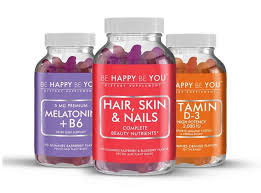
“Generally speaking, more/stronger colour is associated with stronger taste/greater efficacy.” We associate white, says Spence, with an absence of taste. “Ever wondered why Pepto-Bismol is pink?” he asks of the indigestion medicine. “The owner’s intuition was that children would be more likely to drink it if it looked pink and thus sweet.”
The texture is also key. “By explicitly selling supplements in gummy/chewy form, there is both a link to sweets, which people like, and also a very strong cue that this will not taste bad.”
Looks may matter but, as far as nutritional benefits go, it’s what’s inside that counts.
Dietitian Sophie Medlin says most gummies fail to offer any benefits beyond traditional pills. She adds that “it’s hard to get a meaningful amount of anything into a gummy because of all the other stuff you have to put in there to make it taste OK, to make the mouth feel OK, and to make it look cool.”
According to Dr Federica Amati, a postdoctoral medical scientist and nutritionist: “Gummies are often high in sugar. There isn’t a particular benefit to this, unless you find traditional supplements difficult to take.”
Valerie Stark, a neuroscientist and director at Novomins, a gummy company that prides itself on being founded by doctors, scientists and nutritionists, raises the use of the pigment, titanium dioxide.
“Some gummy companies use it because it’s a convenient and cheap ingredient that creates a specific structure and taste, and adds this pastel coating on pills. But in 2022, the EU banned it. The UK was supposed to follow, but Brexit cancelled all those decisions. We’ve looked at the research, and it isn’t something we want to have in our gummies.” Medlin agrees on this point. “It’s considered too high risk to be added to anything for human consumption, but until we get our act together in terms of regulation, people will exploit these legal loopholes.”
Sweetness is the gummy’s secret weapon
While traditional pills, washed down with a glass of water, are sugar-free, many multivitamin gummies list sugar as the first ingredient, followed by glucose syrup (another word for sugar). One particular pregnancy gummy lists the first two ingredients as glucose syrup and sucrose (sugar and sugar), while a hair, skin and nails gummy lists glucose syrup, sugar and glucose as the first three ingredients. It’s no wonder we like them.
“If the first listed ingredient is sugar, that’s the main thing you’re getting,” says Medlin. “These companies use multiple forms of sugar to capitalise on the fact that consumers don’t know the names of all the different types.” The fact that some sugary gummies are promoted as a supplement for weight management is particularly galling.
As a nation, we have one hell of a sweet tooth; candy sales in the UK increased by 6.9% just last year, with Haribo, the world’s first gummy candy, invented in 1922 in Germany, selling an extra 13m packs. Meanwhile, M&S says they shift 271 bags of Percy Pigs every minute.
Gummy sweets don’t only appeal to kids, either. More than half a century ago the advertising slogan “Haribo macht Kinder froh” (Haribo makes children happy) was changed to include “und Erwachsene ebenso” (and adults, too).
Gummy makers might argue that we’d be better off chewing a candyceutical or two than scoffing a packet of sweets. But public health tsars would counter we need to get a grip on our sugar cravings, not add more sugary offerings to the market, regardless of whether they purportedly provide a vitamin kicker…..
The Guardian: Read the full article here