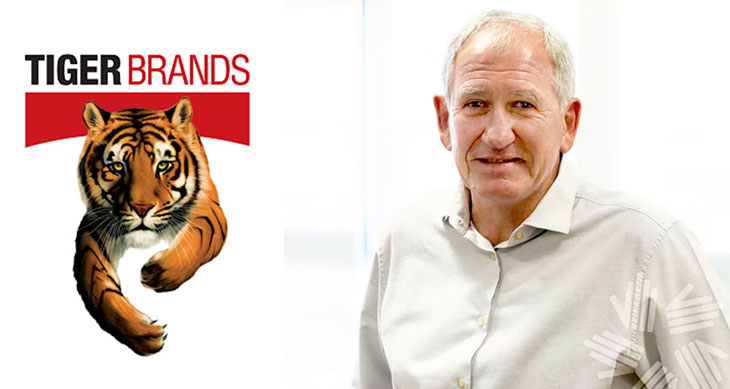
28 Jun 2025 Tiger Brands finds its mojo under Tjaart Kruger’s leadership
How Tjaart Kruger turned a wounded giant into the JSE’s comeback kid in 18 months…
When Tjaart Kruger took the helm at Tiger Brands in Bryanston on November 1, 2023, the company was struggling with years of poor performance and reputational damage.
Its costly misstep in Nigeria with Dangote Flour Mills and the devastating 2017–2018 listeriosis crisis in South Africa had left lasting scars.
Fast-forward 18 months, and Tiger Brands has made a dramatic recovery, as this excellent analysis by Financial Mail asserts. Its stock has nearly doubled in value, and the company has accumulated enough cash to issue a special interim dividend of R12.16 per share — on top of the regular R4.15 dividend.
“One sign we’re heading in the right direction is that people are actually reaching out to work here again,” Kruger said during a recent results call. The company reported a 34% rise in headline earnings per share and, for the first time in five years, an uptick in sales volumes.
The recovery follows a long stretch of internal setbacks. Previous leadership saw the company through major crises, including a R10-billion write-off from the Dangote investment, ongoing class-action litigation over listeriosis, and years of declining sales.
Despite these challenges, Tiger remains a dominant force in South African food manufacturing. Its Albany bread brand is one of three major players — alongside Sasko and Blue Ribbon — that account for 80% of national bread volumes. It also leads in shelf-stable grocery products, controlling 13% of the aisle value through iconic brands like Koo, Tastic, All Gold, Jungle Oats, and Black Cat.
This gives it an edge over Pioneer Foods (11%), AVI (5%), and Premier (4%).
Optimising operations
Kruger, known for revitalising Premier Foods, brought a sharp focus on operational efficiency to Tiger. Upon arrival, he dismantled the company’s centralised structure, introducing a more agile, decentralised model.
“Leaders need to be embedded in the business, making real-time decisions,” he said, criticising the previous top-heavy approach.
Each division was soon assigned its own MD and commercial team, complete with performance dashboards tracking key metrics like margins and working capital. The new structure directly informed Tiger’s streamlined capital strategy: investments are measured against specific performance metrics, and surplus funds are returned to shareholders instead of being spent on non-strategic acquisitions.
Tiger’s return on invested capital (ROIC) now exceeds 20%, comfortably clearing its cost of capital, estimated around 12%. According to CFO Thushen Govender, who joined in early 2024, efficiency initiatives have already yielded R200-million — well ahead of the two-year R500-million target. The company also reduced working capital demands by renegotiating supplier terms and shifting its payment practices.
As a result, Tiger’s balance sheet has improved drastically, swinging from R2.7-billion in net debt a year ago to nearly R6-billion in net cash by March 2025. A R1.8-billion special dividend and a cautious share buyback programme are currently underway. Kruger has ruled out overpaying for acquisitions that don’t align with Tiger’s strategic focus.
Instead, the company is prioritising infrastructure upgrades, such as a new mega-distribution centre in Gauteng, a state-of-the-art bakery, and a consolidated candy production facility. Only once these are complete will the company consider acquisitions in core categories like oats and dry pasta, avoiding ventures into unfamiliar territory.
Tiger has already streamlined its brand portfolio. It sold off baby-care lines Purity and Elizabeth Anne’s, exited its investment in Chile’s Carozzi, and agreed to divest the underperforming Langeberg & Ashton fruit canning facility. Most recently, it announced the sale of the Randfontein maize mill and the Ace wheat brand.
Kruger explained that the maize milling sector has become oversaturated, with more than 350 small, regional players competing on price. Large corporates like Tiger can’t match their cost structure, making it an unviable business. The exit allows Tiger to concentrate production at its more efficient Hennenman and Pietermaritzburg mills.
Other divestments under consideration include the Chococam unit in Cameroon and legacy chocolate operations under the Beacon brand. Despite Beacon’s long-standing presence, Kruger acknowledged that Tiger lacks the scale and product quality to compete with market leaders like Mondelēz’s Cadbury brand. Instead, the company is shifting focus to high-margin sugar confectionery products like Fizzers and Maynards.
If suitable buyers aren’t found, Kruger said Tiger will continue operating the chocolate assets for cash rather than sell at a loss.
Kruger’s approach to workforce changes has been measured. While temporary contracts were not renewed following the sale of the baby food business, broader job cuts have been avoided. Staff are being redeployed wherever possible, with new roles created in logistics, data analytics, and export functions to support strategic shifts.
Rejuvenating mill and baking
The improvements are most visible in the company’s milling and baking division, previously a weak spot. By adopting route optimisation software, Tiger reduced delivery distances and damage rates, saving about R60-million annually. It also closed unprofitable depots and phased out slow-selling loaf sizes to cut waste.
These efficiencies helped push the division’s operating margin into the high teens, despite flat category volumes. Albany has regained 0.8% in market share over six months, especially in informal retail channels, which account for 65% of bread sales.
Delivering reliably to spaza shops is crucial, and Tiger has increased its on-time delivery rate to over 90%, up from around 70%. Every 1% gain in delivery efficiency saves roughly R12-million in fleet costs and R25-million through reduced returns and unsold inventory.
These gains are feeding into the development of the new East Rand super-bakery, set to open in October 2026. Capable of producing 1.8 million loaves per day, it will replace five or six older bakeries, reducing overheads by R250-million annually. Kruger sees it as a cost-efficiency play rather than a capacity expansion.
Grains have also rebounded. By switching to more cost-effective wheat varieties and renegotiating toll milling fees, Tiger cut raw material costs significantly. Its flagship pasta line, Fatti’s & Moni’s, is now priced at R14.99 — an attractive price point identified through consumer research. As a result, production has surged, with facilities running at full tilt for the first time in years.
Similarly, falling international rice prices allowed Tiger to reposition its Tastic brand without sacrificing margin. The company’s rice team now monitors global markets daily to avoid past missteps, such as a 2023 incident involving poor-quality Thai rice that led to significant losses.

Trimming and reengineering
In culinary products, lighter packaging and recipe adjustments have helped maintain margins amid rising input costs. For example, Crosse & Blackwell mayonnaise now uses less plastic, Koo cans weigh less, and sugar in All Gold has been reduced to fall into a lower tax bracket.
In the snacks and beverages segment, Tiger achieved double-digit profit growth despite rising input costs. Reformulating Oros and resizing Jungle bars and Maynards gummies helped maintain volume while lowering costs. The company is also consolidating its Durban candy plants into a more efficient single site….
Financial Mail: Read the full story here [paywall]
Related reading:
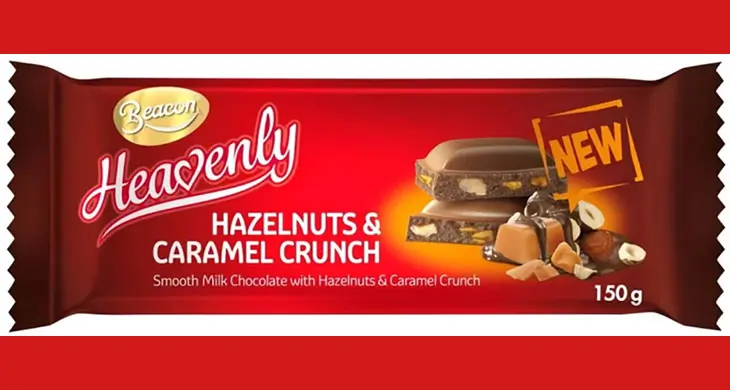
Tiger Brands looks to exit the chocolate business
Beacon chocolates have long been a household favourite, but now, change is on the horizon with Tiger Brands announcing plans to divest the business.