


06 Jul 2026 The KitKat Heist: how bad news became a marketing triumph
Nestlé’s KitKat brand has won big at the “Oscars of advertising” as the famed Cannes Lions International Festival of Creativity is known.…
‘The KitKat Heist’ has won multiple Lions at this year’s Cannes Lions, including a Grand Prix, four Gold Lions and four Silver Lions.
The Cannes Lions is the world’s largest and most prestigious annual gathering for the advertising, marketing, and creative communications industries.
The real-time campaign turned an unexpected product theft into a global cultural moment, showing how distinctive, insight-led brand-building can deepen consumer engagement and keep Nestlé’s iconic brands relevant.
The brand also won two Bronze Lions for its ‘Little Breaks’ campaign.
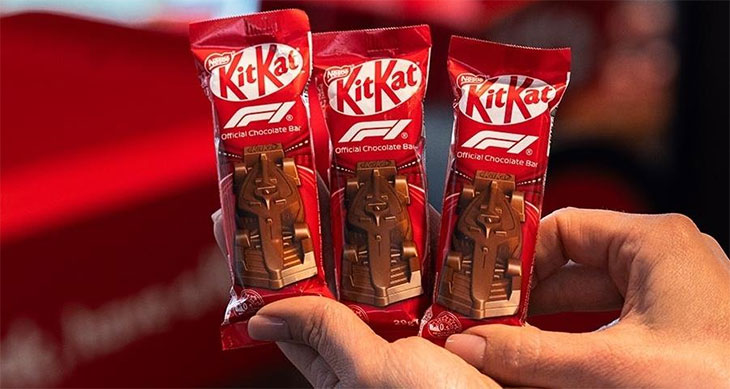
The “Great KitKat Heist” refers to a massive 2026 supply-chain incident just before Easter where thieves hijacked a truck carrying over 12 tons (413,793 bars) of limited-edition, Formula 1 race car-shaped KitKats.
Instead of burying the crisis, Nestlé and their agency VML leaned into it with humour and transparency. They launched the interactive Stolen KitKat Tracker to deputise the public as “chocolate detectives”.
KitKat’s response quickly sparked attention across culture, social media and earned media, turning a real-world incident into a moment of participation, conversation and impact at scale.
The campaign became a global phenomenon, generating over $224-million in earned media value.
“These awards prove the power of consistency, distinctiveness and cultural relevance in brand building,” said David Rennie, Executive VP and head of Nestlé’s Strategic Business Units and Marketing and Sales.
“Nearly 70 years of ‘Have a Break. Have a KitKat’ gave people a simple idea to make their own – and our teams moved boldly and fast to turn that moment into global conversation.
“This underscores the importance of our brand-building strategy: to create brands that earn choice and trust, connect deeper with consumers and drive real impact.”
Nestlé says it uses data-driven consumer, category and customer insights to develop products and brand “experiences that are superior, offer value, are visible where people shop, and communicate in ways that cut through”.
The company’s goal, it adds, is to build brands that win with consumers, gain market share and accelerate real internal growth.
“That is why Nestlé is focusing its media investment on fewer, bigger and higher-impact activities for its core brands. It uses technology and AI to connect end-to-end processes across the consumer journey, helping make marketing faster, more consistent and more cost-effective,” notes the press release.
Source: Nestlé
Breaking better: How KitKat turned a chocolate heist into a marketing and a supply chain masterclass
Some excellent insights from IMM Graduate School…
In March 2026, a bizarre story began circulating across global media. More than 400,000 KitKat bars, weighing approximately 12 tonnes, disappeared during transit across Europe.
What could have remained a quiet supply chain disruption quickly became one of the year’s most talked-about brand moments, offering a real-world lesson in brand agility, crisis communication, and the strategic power of humour.
Rather than treating the incident as a reputational risk, the brand leaned into it with wit, speed, and a communications response so precisely timed and on-brand that it blurred the line between corporate statement and cultural entertainment.
KitKat and Nestlé have explicitly denied that this is a stunt or April Fools’ promotion, stating publicly that “someone really stole 12 tonnes of KitKats” and that investigations with local authorities are ongoing.
The sceptic’s perspective
Not everyone has accepted the story at face value. A commentary in The Drum raised several flags, which the brand has strongly denied:
- The AFP wire report was vague about the precise location of the theft.
- No police crime reference number has been made public.
- Nestlé issued a supply correction via PR Newswire rather than its own news platform.
For the IMM Graduate School, the debate itself is instructive. Whether this was a genuine theft brilliantly managed, a planned campaign executed with discipline, or something in between, the communications principles are identical and worth studying.
IMM Graduate School: Read its great insights here