

11 Sep 2025 SAAFoST Congress 2025 – Take #2: Things that struck, and stuck
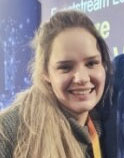
SAAFoST Congress 2025, held recently at CSIR Convention Centre in Pretoria, was a superb three days … it’s an impossible job to cover every aspect of the event, but here freelance food scientist and writer, Jesse Kelfkens, shares her impressions from some of the lectures she attended….
August in Pretoria is hot, not only in temperature, but also in the way the conference hall warms up as the attendance builds, with excited minds, keen anticipation and welcome coffees.
Maybe it is the distinct hum in a room full of food enthusiasts, the majority of whom are scientists? Not the sound of machines or lab-grade freezer units, but the exhilarating hum that comes from meeting familiar faces and fresh possibilities.
That’s how it felt as business, academia, industry and students from home and abroad gathered at the CSIR International Convention Centre for SAAFoST’s 26th Biennial Congress (SA Association for Food Science & Technology).
The Congress theme: SAAFoST’s Northern Branch were this year’s organisers, and its committee devised the theme “Unlocking potential: Integrating science and innovation for a brighter food future.”
A phrase that could signify everything (and nothing) until the papers, panels, and the people filled in the blanks.
What does it mean to “unlock potential” when the locks are always shifting? That question lingered like condensation on an incubator lid. Here are the moments during several talks at SAAFoST 2025 that stayed with me after all the microphones were stilled.
Anthony Warner – Keynote Speaker
Warner, popularly recognised as The Angry Chef, is a British biochemistry graduate who subsequently became a chef, prolific food writer and myth-buster. His goal is to help people enjoy what they eat with clarity and confidence by cutting through the veil of fad diets and scare tactics often sold as “science”.
Talk title: Why food isn’t medicine, and you aren’t what you eat
My take: Anthony Warner does not sugar words. His attack on the vague, middle-class bias of the term “ultra-processed food” (UPF) hit like an unpinned grenade. Many UPFs are more nutritional, inexpensive, and safe than we realise. Our great-grandmothers ate “simpler” diets but they also had shorter lives. Warner provided complexity rather than comfort, which may be the more beneficial nutrition.
Prof Rikard Landberg – Keynote Speaker
Rikard Landberg is Professor of Food and Health at Chalmers University of Technology in Sweden. His research focus is on plant-based diets, gut microbiota, and cardiometabolic health, with the intention of discovering food biomarkers through advanced metabolomics.
Talk title: The role of personalised nutrition in a sustainable diet era
My take: Landberg questioned why we pretend we’re all the same when we are unique. Human metabolism varies depending on genetics, culture, habits, and history. Future nutrition is about seeing the individual in the food rather than relying on a single paradigm. He warned that nutrition science forgets humans are individuals when it progresses too quickly. Working to identify the individual’s markers can assist with preventing major issues like diabetes by making simple dietary changes.
Christie Tarantino-Dean – Keynote Speaker
The CEO of the Institute of Food Technologists (IFT), a global network of food professionals.
Talk title: Greetings from the Institute of Food Technologists (IFT)
My take: Tarantino-Dean did not boast about membership figures. She discussed bridges and collaboration between the North and South. Stellenbosch University’s Prof Gunnar Sigge’s role as IFT President Elect, and local student Jana Schreuder’s success as the first non-US student president demonstrated this argument. As Nigerian, Prof Joseph Abu of NIFST, later observed, Africa is not waiting to be included – it was in some ways even leading.
Stellar Frisby – Speaker
A South African patent lawyer with Hahn & Hahn, and daughter of SAAFoST stalwart, Owen Frisby. She also boasts a BSc in Agriculture alongside her LLB.
Talk title: Protecting innovation in the food industry through intellectual property
My take: Who owns an idea? Frisby tackled the question that most people avoid, ‘What becomes of your idea once you disclose it?’ In food science, innovation frequently blurs the distinction between lauded and stolen. Her message was clear to discuss the options with a law professional, so as to best protect patents, trademarks and identities. Congratulations are due – Frisby won the Dreosti Prize for the best oral presentation at Congress!

Márcia Terra – Keynote speaker
A Brazilian nutritionist who operates with the Brazilian Society of Nutrition and Food (SBAN) as well as the US-based Academy of Nutrition and Dietetics, she is a major critic of the Nova system applied to UPFs.
Talk title: Ultra-processed confusion: Why demonizing sweeteners and additives harms public health
My take: Terra showed how the public notion of UPFs tends to blame additives and sweeteners and processing methods without considering their purpose fully. UPFs aren’t ‘bad’, they’re a way to fight poverty and injustice. She noted that we like novel concepts and advancements in health and tech. Why not in food? No scientist is out to murder the people who would help them advance.
Her speech was more about sociology than nutrition. The problem isn’t what we eat, but how we demonize modern food and loneliness that comes when we lose touch with each other around the dinner table.
Dr John Kinyuru – Speaker
Kinyuru is a Kenyan food and nutrition researcher and a senior lecturer in Food Science and Technology at Jomo Kenyatta University of Agriculture and Technology.
Talk title: Can we redesign a modern African food system with insect-based products?
My take: Kinyuru challenged us to envision food systems that crawl. In Africa, insects are a common food source because they are efficient, nutrient dense, long-lasting, and easy to find. The food isn’t the problem. That’s the tale we tell ourselves – “the ick factor”.

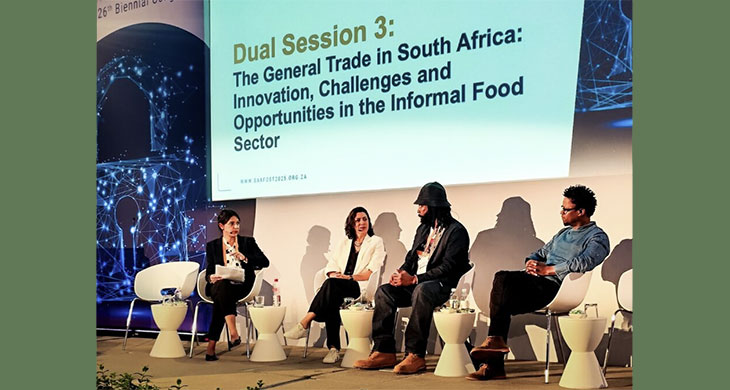
DJ Sbu, Jessica Boonstra & Miles Khubeka – Panelists
Miles Khubeka – Panelists
DJ Sbu (far left) is an entrepreneur, media personality, and social pioneer, advocating for township entrepreneurship and innovative business models.
Boonstra (2nd fm R) is the founder and CEO of Yebo Fresh, a leading B2B e-commerce platform that’s improving food availability in townships. Leading merchandising group, Smollan, purchased Yebo Fresh in 2025, aiming to better modernise township retail.
Kubheka (far R) is a businessman, author, and founder of the Wakanda Food Accelerator, Vuyo’s Restaurant and Gcwalisa. He promotes innovation in township communities particularly the informal food sector.
Session title: Data, distribution and dignity: The future of food commerce in the informal sector
My take: Dynamic and fascinating look at informal markets, everyday genius! Boonstra called it “data, distribution, and dignity”. Khubeka and DJ Sbu showed us the reality, reminding that spaza shops and side-hustles feed communities as powerfully as supermarkets. Food systems are not just in policies; they are also in alleys; economies of appreciation and trust that can’t be measured.
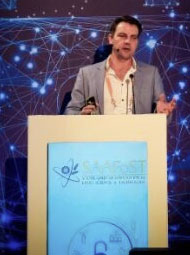
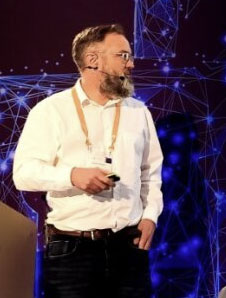
Rolf Uys – Speaker
Uys is food safety auditor and consultant with vast experience in more than 60 countries. He is now GM of Didactics Africa.
Talk title: The use of AI in food safety
My take: Uys and colleagues believe AI is here to stay as revolutionary tech that needs incorporation. They demonstrated the use of AI tools in the SA environment to make things understandable and more inclusive: translation to African languages, simplifying the complexity of regulations, guiding food safety, improving efficiency and reaching those excluded. Not replacing humans but including all.
Session on mentorship in the food industry: Unlocking success for individuals, mentors & businesses
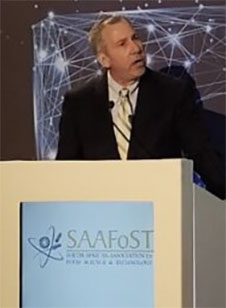

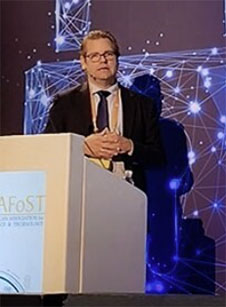
Dr Christopher Daubert – Speaker
Daubert serves as VC and Dean of the University of Missouri’s College of Agriculture, Food, and Natural Resources, as well as President of IFT.
Talk title: How can we prepare the next generation of food scientists to tackle some of the world’s biggest challenges?
Yolande Schulz & Dr Anja Laubscher – Speakers
- Schulz (L) is the Regional R&D Director of McCormick, where she oversees product innovation across Europe, the Middle East, and Africa. And now VP of SAAFoST!
- Laubscher is a food scientist at Sally-Ann Creed co, specialising in quality control, product innovation, and labelling legislation. The duo shared their story of mentorship/menteeship.
Talk title: The power of mentorship:
My take: All the speakers reminded us that data alone doesn’t lead to breakthroughs, but mentorship does. They highlighted the importance of mentoring as well as being open to being a mentee, no matter your position or age.
We often conceive of mentorship as one-way, with an older, wiser person paving the way to a younger, naïver individual. However, Schulz and Laubscher, and the other participants did not characterise it that way. Rather, they approached mentorship as an ecosystem.
Schulz explained it as a wisdom exchange, moving bilaterally. Mentors have the advantage of staying relevant while contributing back to the profession within the next generation, an echo of their younger selves. It’s a form of leadership which requires no title, just presence, patience and capacity to say, “Yes, you belong here”.
Among its benefits are increased chances of employee retainment and promotion. It’s vision, assurance and guidance for the mentee. And something new emerges from the gap between the mentor and mentee; culture, security and endurance.

Professor Ryk Lues – Speaker and new SAAFoST President
Lues is a food safety specialist and Director of the Centre for Applied Food Sustainability and Biotechnology (CAFSaB) at the Central University of Technology (CUT). He specialises in the social-behavioural factors that influence food safety.
Talk title: Food safety culture
Closing take: This brings us to Professor Ryk Lues, the new SAAFosST president, who ended with a talk that summarised “Your most important food safety asset is your organisational culture.”
No protocols. Not tools or tech. Culture.
Concluding thoughts
SAAFoST 2025 didn’t have a big unveiling. There wasn’t one moment that went viral, no one-size-fits-all answer. What came out instead was a mosaic, a group of pieces that fit together, not glued by certainty, but bound by a shared interest.
Food’s future is not a menu. It is a map in the making. And if maps are honest, they don’t depict straight lines. They show culture, background, and paradoxes. The same can be said of ourselves, as it turns out.