


31 May 2026 How food lost its taste
The amazing modern global food system delivers abundance without pleasure, nutrition without nuance, and produce that looks the part but tastes of nothing….
Across the last century, industrial agriculture has systematically eroded flavour from fruits, vegetables and grains, replacing diversity and taste with uniformity and yield.
A new deep-dive article in The Guardian traces this decline to the Green Revolution, when breeders and policymakers have prioritised productivity above all else.
High‑yielding monocultures, chemical fertilisers and varieties have been engineered for transport and shelf life reshaped global food supply — but at the cost of the sensory qualities consumers once took for granted.
The first major blow came from fertiliser‑driven farming systems that have weakened the link between soil health and flavour.
As the article argues, flavour is fundamentally a soil story: strong plants grown in complex, microbially rich soils produce the polyphenols and phytonutrients that create depth of taste. But industrial fertilisers have simplified soil biology, producing vigorous yields but nutritionally and sensorially weaker crops.
This shift, combined with mono-cropping, has degraded more than a third of the world’s soils, further diminishing flavour potential.
Breeding priorities have compounded the problem. For decades, breeders have selected for traits such as uniform ripening, thick skins, mechanical harvestability and long‑distance transport tolerance. Flavour — genetically complex and difficult to measure — has been sidelined.
Tomatoes are the emblematic casualty: the once‑dominant, flavour‑rich Rutgers variety have been replaced by tough, transport‑friendly cultivars that can survive long journeys to the supermarket but deliver little taste.
Strawberries have followed the same path, growing larger and hardier but inevitably less sweet, as sugar content gets diluted across bigger fruit.
Post‑harvest logistics have delivered the final blow. Produce is routinely picked unripe, stored for weeks and artificially ripened, severing the natural flavour‑development process.
Consumers, experiencing only these diminished versions, have adapted their expectations downward — a classic case of “shifting baseline syndrome”. Many now prefer the taste they grew up with, even if it’s objectively bland.
Working to restore taste
Yet the article also highlights a growing counter‑movement. Breeders are using advanced genetics and alternative market models to reintroduce flavour without sacrificing viability.
Chefs, scientists and small‑scale farmers are pushing for a flavour‑first food culture, arguing that deliciousness could be a powerful lever for healthier diets and more sustainable farming.
If consumers rediscover what real flavour tastes like, demand could shift — and with it, the incentives that shape the entire agricultural system.
The article frames flavour loss not as nostalgia but as a structural failure — and flavour’s return as a potential catalyst for systemic reform….
The Guardian: Read the full article here
Related reading:
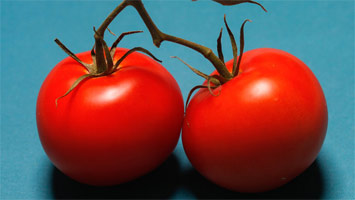
A flavour face-lift for supermarket tomatoes
Researchers have sequenced the genes of hundreds of tomato varieties to construct a road map back to desirable flavour.