


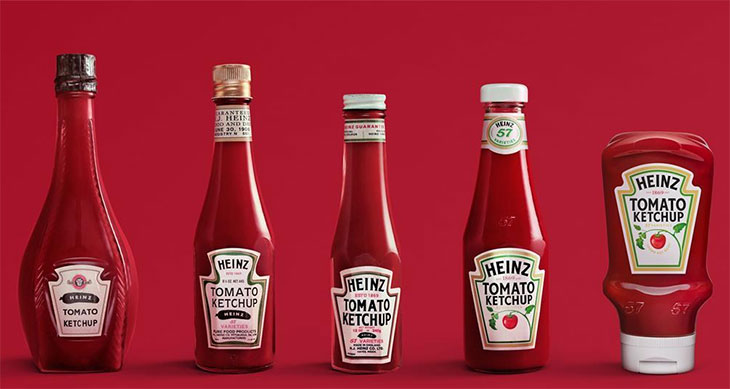
08 Jul 2026 Heinz ketchup at 150
Few food products have held their place in global culture quite like Heinz tomato ketchup….
Eating habits have changed dramatically over the past 150 years but Heinz’s red sauce, first sold in 1876, remains a fixture in homes, restaurants and childhood nostalgia worldwide.
Heinz now sells over 650m bottles a year, more than 1 200 bottles every minute, and processes enough tomatoes daily to fill an Olympic swimming pool.
It’s a remarkable example of how taste, technology and brand-building can entrench a product so deeply that it becomes the default choice for generations.
A condiment with centuries of history
Ketchup’s origins stretch far beyond America. The word likely derives from ke-tsiap, a fermented fish sauce used in Asia. British and Dutch traders tried to recreate it in the 17th century, producing mushroom, plum and walnut versions instead.
Tomato ketchup only took off in the early 19th century, becoming a favourite on eggs, corned beef hash and liver in America.
But early tomato ketchups were unstable; they were watery, prone to spoilage, and often disguised in coloured bottles to hide mould or bacteria. Manufacturers relied on preservatives like sodium benzoate and coal‑tar dyes to keep products shelf‑stable.
Heinz’s breakthrough: clean, stable and proudly transparent
Henry J Heinz saw an opportunity. He developed a ketchup that avoided preservatives entirely – marketed as “NOT drugged” – using ripe tomatoes for flavour and colour, and vinegar to inhibit microbial growth.
Crucially, he packaged his ketchup in clear glass bottles, signalling purity and quality at a time when competitors hid their product behind tinted glass .
This combination of food science and marketing savvy set Heinz apart and established the blueprint for modern ketchup.
The flavour formula that conquered the world
Heinz’s enduring appeal lies in its balance: sweet, umami and tangy, according to condiment expert Claire Dinhut, author of The Condiment Book.
The sweetness pairs well with salty foods, while the acidity cuts through greasy dishes. Its versatility spans curries, fish dishes and even breads, but its strongest cultural anchor is comfort food; chicken nuggets, chips, and macaroni cheese, and so on.
Nostalgia, more than novelty, is the secret ingredient.
Marketing that turned a product into a default
Heinz is one of the world’s most recognised food brands: 100% of Britons and 97% of Americans know it, according to pollster, YouGov.
By positioning itself as the ketchup — the one that “has to be Heinz” — the brand created a self‑reinforcing cycle of loyalty and expectation.
Even with cheaper, artisanal or gourmet alternatives on shelves, many consumers still reach instinctively for the familiar glass bottle.
Heinz’s story is more than a nostalgic look at a global icon – it’s a case study in:
- Brand dominance built over decades
- Clean‑label innovation long before it was fashionable
- Packaging as a trust signal
- Flavour architecture that transcends trends
- Marketing that shapes consumer defaults
At 150 years old, Heinz ketchup remains a masterclass in how a simple product can become a global cultural anchor.
Source: The Economist