


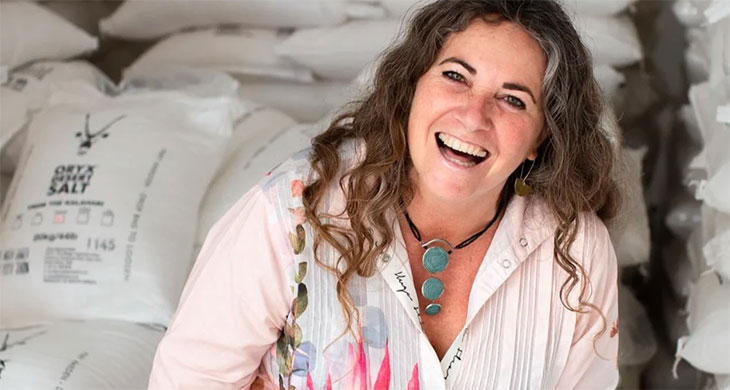
25 Feb 2026 The Oryx story: Building a salt empire from a garden shed
Oryx Desert Salt has become a household name, with the unmistakable Gemsbok logo gracing many dining tables across South Africa.…
The rise of Oryx Desert Salt is one of those wonderful food industry stories that blends great provenance and sharp brand positioning with dollops of grit and determination.
What began as a small, self‑funded venture in a wooden Wendy house has become a premium South African ingredient brand sold in more than 23 countries, on airlines, and in major US retailers. For the local food sector, it’s a case study in how provenance, purity and storytelling can elevate a commodity into a value‑added product.
Founder of the Company, Samantha Skyring, has built the brand from nothing but her passion for the pure healing power of Kalahari salt, starting out in 2009, armed with 34 tonnes of Kalahari salt she had purchased with her savings, and embarking on hand packing it under the most modest of circumstances.
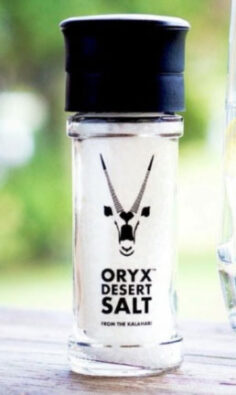
Why origin and purity matter in the salt category
Salt is one of the world’s most universal ingredients, but Oryx’s positioning hinges on the purity and geological uniqueness of its source. The Kalahari salt lake — a 55‑million‑tonne underground deposit renewed by subterranean rivers — produces naturally oversaturated brine that crystallises within weeks in the desert heat.
This short crystallisation cycle reduces exposure to contaminants, a contrast Skyring draws with sea salt, which is increasingly scrutinised for microplastic contamination.
For food manufacturers and retailers, this taps into a broader consumer shift: ingredients with clear provenance and minimal processing are gaining traction across categories.
Oryx’s messaging around “unrefined, unprocessed, uncontaminated” salt aligns with clean‑label expectations and the premiumisation of everyday pantry staples.
Building a brand through storytelling and symbolism
The brand’s narrative is rich with personal encounters, desert journeys and symbolism, giving it emotional depth that resonates with consumers and buyers alike.
In a category where many products look interchangeable, Oryx demonstrates how strong storytelling can differentiate even the most basic ingredient.
The Oryx brand identity — anchored by the Gemsbok logo — is not incidental. Skyring collaborated with well‑known brand architect Grant Rushmere (BOS Ice Tea, Striped Horse) to create a visual identity that communicates both desert heritage and South African authenticity.
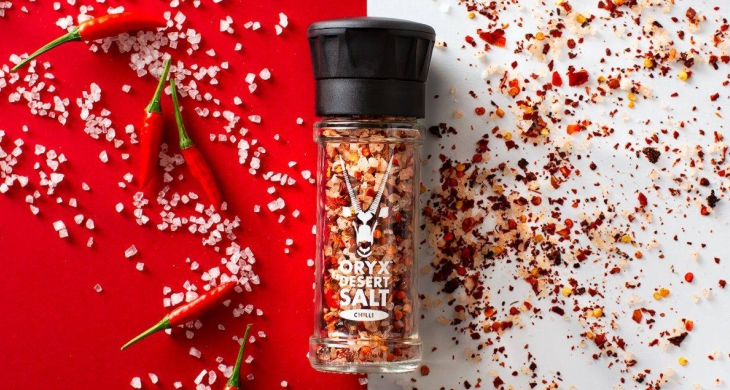
Scaling from local markets to global distribution
Oryx Desert Salt’s growth trajectory mirrors that of many successful South African challenger brands: start small, build local loyalty, then expand through targeted export channels.
Early traction came from local markets and word‑of‑mouth, but the turning point was securing listings with Whole Foods in the US — a retailer known for championing premium, provenance‑driven products.
Today, Oryx is sold through Whole Foods, World Market, Amazon, and on airlines such as JetBlue and Amtrak, while maintaining strong presence in South African retail and foodservice. The company now employs more than 45 people, mostly women, and continues to scale production from its Kalahari source.
For SA food brands, this underscores the value of:
- Export‑ready packaging and branding
- A clear, defensible product story
- Consistency in quality and supply
- Alignment with global clean‑label and sustainability trends
Navigating setbacks and resilience in the food sector
Like many food businesses, Oryx faced severe disruption during the Covid‑19 pandemic, losing 60% of its sales almost overnight. Instead of retrenching, Skyring used the period to refocus on strategic accounts and international expansion.
The brand’s recovery — and subsequent growth — highlights the resilience required in a sector where supply chains, consumer behaviour and retail dynamics can shift rapidly.
Her personal journey, including early financial hardship and rebuilding life after leaving Denmark, adds another layer to the brand’s resilience narrative. For industry observers, it’s a reminder that founder‑led brands often succeed because of the tenacity behind them.
Take-outs for the SA food industry
Oryx Desert Salt’s trajectory offers several lessons for local producers, ingredient suppliers and challenger brands:
- Provenance sells. SA’s natural resources — from rooibos to Karoo lamb to Kalahari salt — remain powerful differentiators in global markets.
- Premiumisation is possible in commodity categories. With the right branding and quality cues, even staple ingredients can command higher margins.
- Authentic storytelling builds trust. Consumers increasingly want to know where their food comes from and who is behind it.
- Export markets reward consistency and clean‑label positioning. Retailers like Whole Foods look for products with both purity and a compelling origin story.
- Female‑led food businesses are gaining global traction. Oryx’s growth adds to a growing list of SA women building internationally recognised food brands.
The bigger picture
Oryx Desert Salt is more than a success story — it’s a blueprint for how SA food brands can compete globally by leaning into authenticity, natural advantage and strong brand architecture. As the industry continues to evolve, the companies that win will be those that combine product integrity with a narrative that resonates far beyond local borders.
Source: A retelling of the Oryx story based on this article – Newsday