

25 Mar 2024 Bad business and the bother with boycotts
Nestlé has been the largest publicly-held food company in the world, measured by revenue and other metrics, since 2014. It is also the company on the receiving end of the longest continuous boycott in history. What do these two facts tell us about supersized businesses and the consequences of behaving badly?
I don’t have many vices, but one of the few that I’ve had since childhood is a hot cup of Milo on a chilly day. In my opinion, there is no other malted drink that compares in taste (sorry, team Ovaltine). This is a tough thing for me to deal with, because while I love that signature Milo flavour, I’m deeply conflicted about the business practices of its parent company, Nestlé.
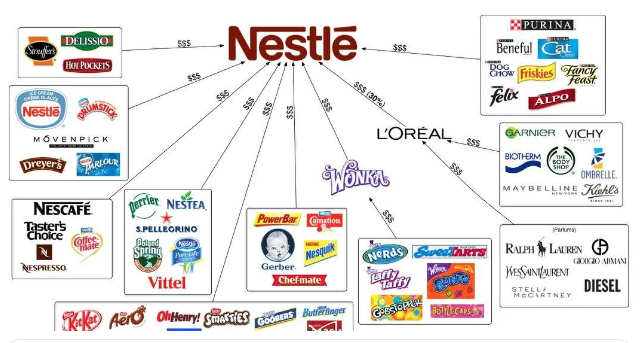
You might attempt to solve this moral conundrum for me by suggesting that if I feel so strongly about Nestlé’s practices, then I should avoid buying their products. A reasonable idea, but much harder to execute than you might imagine, considering the vast amount of brands and products that Nestlé owns. Besides, when you look at Nestlé’s market share, you really have to ask yourself: is a boycott even remotely worth it?
How Nestlé got on the naughty list
In 1974, a document was published that would change public perception of the Nestlé brand forever. Titled “The Baby Killer”, this investigation by journalist Mike Muller was an unflinching exposé of the dodgy tactics used to market baby formula in third-world countries, particularly Africa. While the piece was directed at formula makers in general, there was no escaping the implication that Nestlé was one of the biggest culprits, with the company’s “Mother’s book” (a booklet handed out to new mothers in maternity wards, for free) referenced multiple times in the report.
From a marketing perspective, these tactics seem clever and effective. Scores of Nestlé brand representatives, dressed in nurse’s uniforms, were sent into maternity wards across Africa, Chile, India, Jordan and Jamaica, armed with free samples of baby formula. In the wards, they would speak to new mothers about the benefits of infant formula, a modern Western innovation that, according to them, far surpassed ordinary breastmilk in terms of nutritional value.
Impressed, many of these new mothers would test the formula sample on their babies, unaware that the milk in their own breasts would dry up by the time the sample tin was finished. Now imagine the tin is empty, the baby has become accustomed to the taste of formula, and the mother has no breastmilk left to offer as a substitute. There is no choice but to keep purchasing the product, despite its high cost (in Nigeria at the time, the cost of formula-feeding a 3 month old infant was approximately 30% of the minimum urban wage).
Desperate mothers, trying to “stretch” the amount of formula in the tin, would stray from package guidelines, over-diluting their formula by adding as much as three times the amount of water required. Despite the fact that they were feeding their babies regularly, they were filling their tummies with mostly water, which cannot provide the calories or protein that a growing infant needs to thrive…
Click here – Ghostmail – for the full article